
Understanding Myopia Management: Protecting Your Child’s Vision for the Future
If your child’s nearsightedness seems to be worsening every year, you’re not alone. Myopia (commonly called nearsightedness) is becoming increasingly common — and it’s progressing faster in children than ever before.
At The Optical Collective, we believe myopia management is about more than stronger glasses. It’s about protecting your child’s long-term eye health.
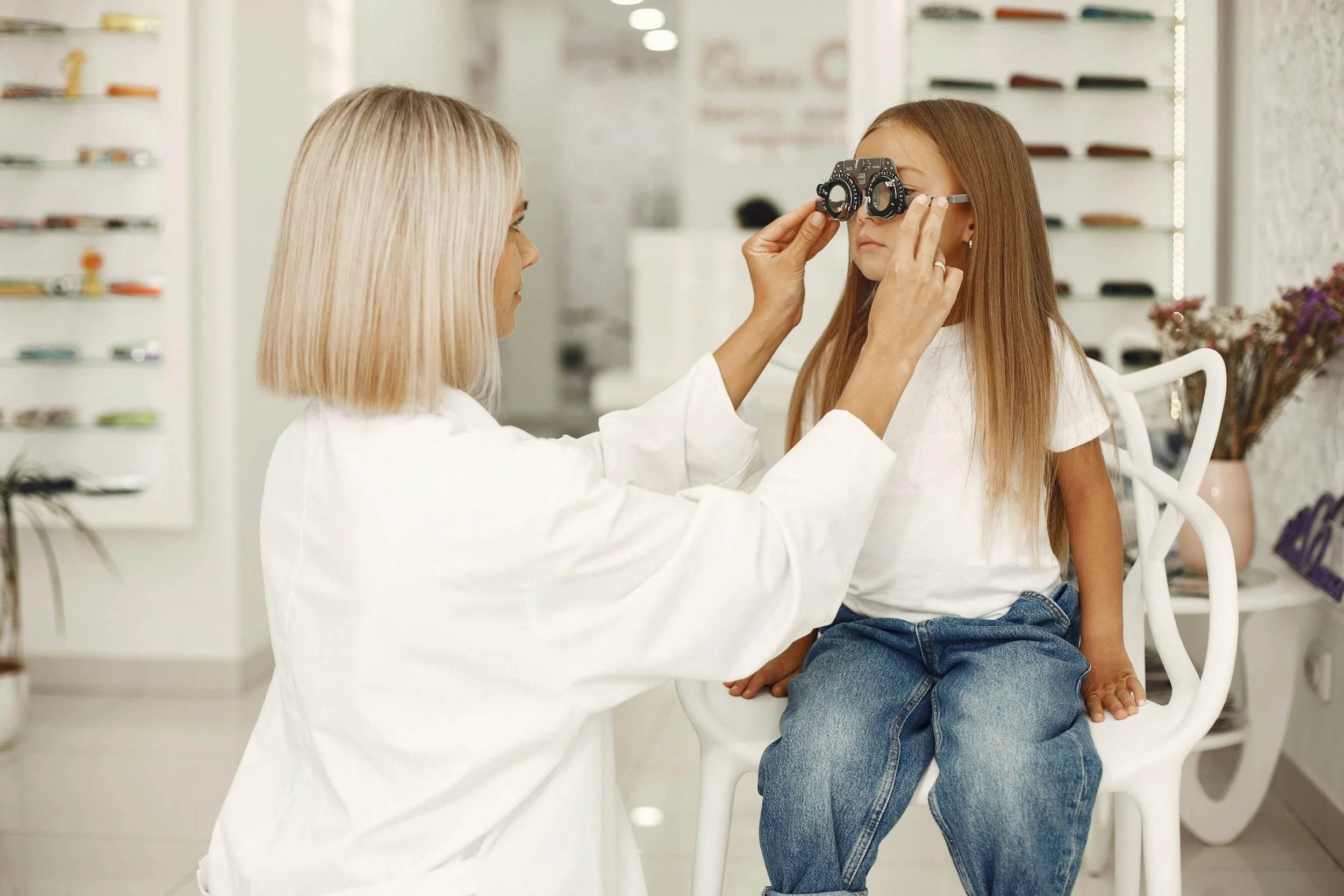
What Is Myopia?
Myopia is a condition where distant objects appear blurry while near objects remain clear. It typically begins in childhood and often progresses through the teenage years.
But myopia is not just about needing glasses. As it progresses, the eye physically grows longer. Higher levels of myopia are associated with an increased lifetime risk of:
Retinal detachment
Glaucoma
Myopic macular degeneration
Early cataracts
The goal is not only to correct vision — but to slow progression.
What Is Myopia Management?
Myopia management refers to evidence-based treatments designed to slow the progression of nearsightedness in children.
Options may include:
Stellest™ GlassesSpecially designed lenses that correct vision while simultaneously helping to slow myopia progression. Stellest lenses use advanced technology to create a specific lens design that signals the eye to slow its elongation — addressing the underlying cause of myopia progression.
These glasses are worn just like traditional prescription eyewear, making them an easy and non-invasive option for many children.
Soft Multifocal Contact LensesSpecially designed lenses worn during the day that both correct vision and help slow myopia progression.
Low-Dose Atropine Eye DropsPrescription eye drops used nightly to help reduce the rate of eye growth.
The right option depends on your child’s age, prescription, lifestyle, and eye health.
Why Early Intervention Matters
The earlier myopia begins, the more likely it is to progress to higher levels. Starting treatment early can significantly reduce long-term risks.
Increased screen time, reduced outdoor activity, and extended near work have all been linked to rising myopia rates. While we can’t eliminate these factors entirely, we can proactively manage their impact.
Is Your Child a Candidate?
Your child may benefit from myopia management if:
Their prescription has increased year over year
One or both parents are nearsighted
They were diagnosed with myopia before age 10
They spend significant time on screens or near work
During a comprehensive exam, we evaluate not only prescription changes but also eye growth patterns and risk factors.
A Proactive Approach to Pediatric Eye Care
At The Optical Collective, we take a thoughtful, individualized approach to myopia management. Our goal is to support clear vision today while protecting long-term eye health for the future.
If your child’s nearsightedness is progressing, we invite you to schedule a consultation to discuss personalized treatment options.
Because managing myopia isn’t just about seeing the board clearly this year — it’s about safeguarding vision for decades to come.